Expat Topics
Living in South Korea
Expat Guide 2026
World's fastest internet, K-culture at its source, cutting-edge cities, and Asia's most dynamic food scene — now with a Digital Nomad Visa
#1 globally
Internet Speed
~270 Mbps avg fixed broadband
from $2,000
Monthly Budget (Seoul)
Single expat incl. rent
~$63,000/yr
DN Visa Income Req.
F-1-D visa, launched 2024
60–80%
NHIS Coverage
National Health Insurance for residents
Top 10 globally
Safety (Seoul)
Economist Safe Cities Index
14th largest GDP
Tech Economy
Samsung, LG, Hyundai HQ
South Korea is one of the world's most technologically advanced nations — and one of its most overlooked expat destinations. Seoul routinely ranks top 10 globally for quality of life, safety, and infrastructure. Internet speeds average 270 Mbps (world's fastest fixed broadband). The National Health Insurance (NHIS) covers 60–80% of medical costs at rates far below Western countries. The country launched its F-1-D Digital Nomad Visa in 2024, requiring approximately 85 million KRW (~$63,000) in annual income. Beyond the cities, Korea offers a staggering variety: cherry blossom seasons, Buddhist temple stays, volcanic islands (Jeju), and a food culture — Korean BBQ, street tteokbokki, chimaek (chicken + beer) culture, and Michelin-starred restaurants — that has taken the world by storm. K-pop and K-drama have created a global community, but living here reveals the deeper culture: the extreme warmth of local hospitality, the 찜질방 (jjimjilbang) sauna culture, and a society that combines hyper-modernity with deep Confucian traditions.
Why Expats Choose South Korea
World's Fastest Internet — 270 Mbps Average
South Korea holds the top spot globally for fixed broadband speed at ~270 Mbps on average. Gigabit fiber is standard in new apartments and costs just $25–$35/month. 5G coverage across Seoul and all major cities is near-total. For remote workers and digital nomads, Korea is the undisputed connectivity champion.
Hyper-Modern Infrastructure
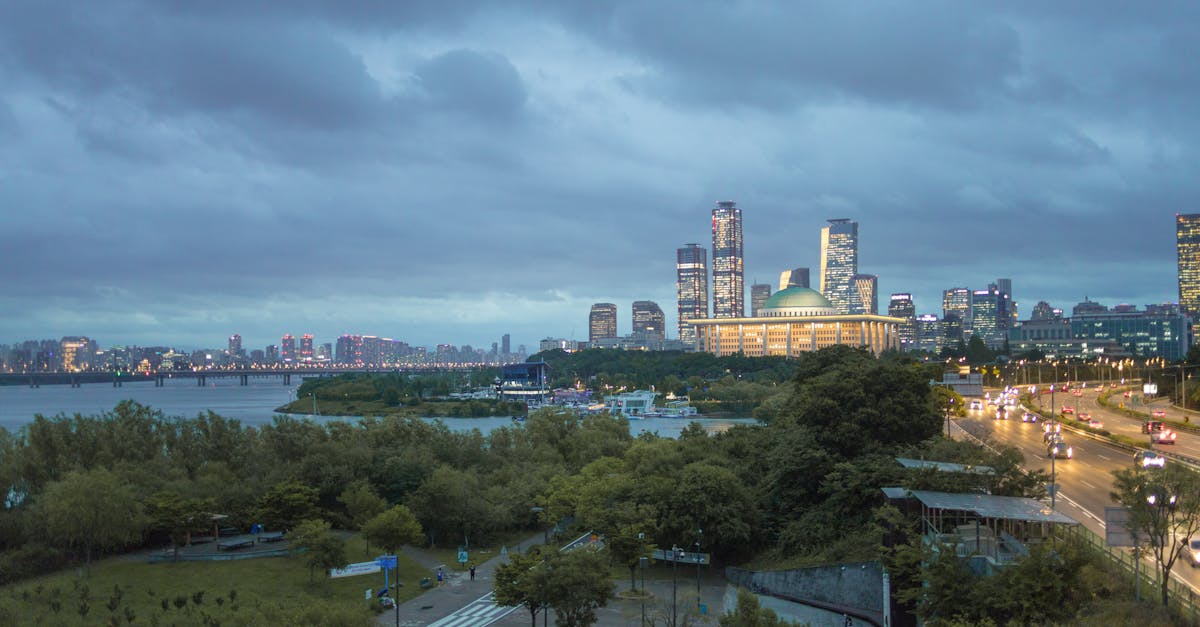
Seoul's infrastructure is genuinely world-class: the metro system spans 23 lines and 700+ stations, runs 24/7 on weekends, and is cleaner than most airports. KTX high-speed rail connects Seoul to Busan in 2.5 hours. Incheon Airport (consistently #1–#3 globally) epitomizes Korean precision. The Han River park system, digital payment everywhere, and 24/7 convenience stores complete the picture.
Korea's Food Culture Is Unmatched
Korean BBQ (samgyeopsal, galbi, wagyu) eaten tableside over live charcoal. Ramyeon at 2am at a pojangmacha street tent. Convenience store gimbap at 900 KRW. The entire banchan spread at a traditional hansik restaurant. Michelin-starred fine dining in Gangnam. Korea's food culture ranges from $1 street food to world-class dining — and all of it is exceptional.
Excellent, Affordable Healthcare
Korea's National Health Insurance System (NHIS) is mandatory for most foreign residents after 6 months. Premiums run $50–$130/month for a single person; the system covers 60–80% of costs. A specialist consultation costs $20–$40 out-of-pocket. Top hospitals like Severance and Asan Medical Center have dedicated international centers with English-speaking staff.
K-Culture at the Source
Seoul is where K-pop, K-drama, K-beauty, and K-food originate. See your favourite artists perform live, shop the actual brands from Itaewon and Hongdae, tour the studios of HYBE and SM Entertainment, and experience the culture that's taken the world by storm — from the inside. The Hallyu wave has created a uniquely welcoming attitude toward international fans turned residents.
Extremely Safe
Seoul consistently ranks in the global top 10 for safety (Economist Safe Cities Index, Numbeo). Violent crime against foreigners is extremely rare. Women consistently rate Seoul as one of the safest cities in Asia for solo travel. Street crime, pickpocketing, and scams targeting tourists are minimal.
Unbeatable Location for Asia Travel
Incheon Airport is one of Asia's premier hubs, with direct flights to 180 cities. Tokyo is 2.5 hours away, Bangkok 6 hours, Hong Kong 3.5 hours. Budget carriers (Air Busan, Jin Air, Jeju Air) make Japan and Southeast Asia extremely accessible. Jeju Island — Korea's Hawaii — is a 1-hour domestic flight with no passport required.
Four Seasons of Natural Beauty
Cherry blossoms in April (Yeouido, Jinhae), vivid autumn foliage in October (Seoraksan, Naejangsan), ski resorts in winter (Pyeongchang — 2018 Olympics venue), and coastal hiking in summer. Korea packs an astonishing range of natural beauty into a country the size of Indiana.
Best Cities for Expats
Detailed guides for the top South Korea expat destinations
Seoul
9.9M city / 25M metro area
25 million people, 23 metro lines, and Asia's most dynamic city — the K-culture epicenter
$2,000–$3,200 USD equiv.
~270 Mbps (world's fastest)
Busan
3.4 million (city)
Korea's coastal city — beaches, seafood markets, film festivals, and 30–40% cheaper than Seoul
$1,400–$2,300 USD equiv.
~250 Mbps (near Seoul levels)
Everything You Need to Know
In-depth guides on every aspect of expat life in South Korea
Visa & Residency
**F-1-D Digital Nomad Visa (2024)**: South Korea's newest long-stay option for remote workers, launched January 2024. Requirements: annual foreign income of at least ₩85 million (~$63,000 USD), employment by a foreign company (not Korean), valid health insurance, and clean criminal record. Grants 1 year, renewable once (total 2 years). Holders cannot work for Korean companies but can work remotely without restriction. **Visa-Free**: Citizens of the US, EU, UK, Canada, Australia, New Zealand, Japan, and 100+ other countries may stay up to 90 days without a visa for tourism or business meetings (not work). **D-10 Job Seeker Visa**: 6 months for those actively seeking Korean employment — useful as a bridge before securing an E-class work visa. **E-Class Work Visas**: Various E-series visas for specific occupations: E-2 (English teaching — most common), E-3 (research), E-7 (special designated activities for sponsored skilled workers). **F-5 Permanent Residency**: Granted after 5+ years of legal residence, meeting income/tax contribution thresholds, and language proficiency (TOPIK Level 3+). The points-based F-2-7 visa can accelerate permanent residency for high earners, investors, and certain professionals. **Jeju Island Special Rule**: Jeju Island offers 30-day visa-free access for nationalities not covered by the mainland 90-day rule (excluding a small restricted list).
Healthcare
**NHIS (National Health Insurance System)**: Mandatory enrollment after 6 months of legal residence. Premiums are income-based: approximately 7.09% of income (employee + employer split), with a floor around $50/month. Self-employed foreign residents pay the full premium themselves (~$80–$130/month typically). **What NHIS Covers**: 60–80% of costs for listed procedures — GP visits, specialist consultations, lab tests, hospitalisation, surgery, and many prescriptions. Mental health is covered. Dental covers basic procedures (extractions, fillings) but not cosmetic work or implants. **Top Hospitals**: Korea's medical technology is world-class. - **Severance Hospital (Seoul)**: International Health Care Center, full English services - **Asan Medical Center (Seoul)**: Korea's largest hospital, internationally accredited - **Samsung Medical Center (Seoul)**: Premium private hospital, full English department - **Pusan National University Hospital (Busan)**: Best in southern Korea **Medical Tourism**: Korea is one of Asia's top medical tourism destinations — plastic surgery, dental work, and dermatology at 30–60% of Western prices, with high quality. **Before NHIS Enrollment**: Get comprehensive travel/expat insurance from providers like Cigna Global, AXA, or SafetyWing.
Cost of Living
**Income Tax**: Korea uses a progressive system: 6% (up to ₩14M), 15% (₩14–50M), 24% (₩50–88M), 35% (₩88–150M), 38% (₩150–300M), 40% (₩300–500M), 42% (₩500M–1B), 45% (above ₩1B). Local income tax (주민세) adds ~10% on top (i.e., 15% national rate → 16.5% effective). **F-1-D Digital Nomad Visa holders are tax residents and owe Korean income tax on their foreign income** once they exceed 183 days — factor this into financial planning. **Korea-US Tax Treaty**: Exists; US citizens may avoid full double taxation. Check with a Korean CPA (공인회계사) for your specific situation. **Banking**: Open a Korean bank account with your ARC. KEB Hana Bank and Woori Bank have dedicated Foreigner Banking Centers with English-speaking staff. Kakao Bank (app-only) is user-friendly but requires Korean language and existing ARC. **Daily Payments**: Korea is arguably the world's most cashless society. Kakao Pay, Naver Pay, Samsung Pay, and credit/debit cards work virtually everywhere — including street food stalls.
Housing
**Korea's Rental System**: Korea has two primary rental structures: 1. **Jeonse (전세)**: Lump-sum deposit (typically 50–80% of property value) paid upfront — no monthly rent. Very capital-intensive; foreigners rarely use it. 2. **Wolse (월세)**: Smaller deposit (typically ₩5–30 million) plus monthly rent. The standard for foreigners. Deposits are refundable at lease end. **Finding Apartments**: - **Naver Real Estate (네이버 부동산)** — the primary platform; Korean only, use Google Translate - **Zigbang / Dabang** — popular apps; some English support - **Foreigner-focused agents**: HelloNest, HiExpat (Seoul) specialize in English-speaking tenants - **Facebook Groups**: 'Expats in Seoul', 'Seoul Apartment Hunters' are active communities **Apartment Types**: Korea's apartments are overwhelmingly high-rise (아파트). Officetels (오피스텔) are studio apartments in mixed office/residential buildings — popular with young expats; slightly more expensive per sqm but easier lease terms. **What to Expect**: Korean apartments include built-in appliances (washer, fridge, AC units), floor heating (ondol — heated floor system), and kimchi refrigerators. All utilities are paid online via automated bank transfer.
Work & Business
**F-1-D Digital Nomad Visa**: Launched January 2024, designed for remote workers employed by foreign companies. Cannot work for Korean employers or start a Korean-registered company. Income requirement: ₩85M/year (~$63K). Open work arrangement for foreign clients during the 1-year stay. **Local Employment**: E-series work visas require a Korean company sponsor. Common paths: - **E-2**: English teaching (requires TEFL + degree from native English country) - **E-7**: Specially designated activities — for professionals sponsored by a Korean employer - **E-3**: Research at a Korean institution **Startup Ecosystem**: Seoul's Gangnam-gu and Mapo-gu districts host Korea's most active startup communities. Key players: Kakao, Naver, Krafton, Line, Coupang (NYSE: CPNG). Government programs like K-Startup Grand Challenge offer funded incubation for foreign entrepreneurs. **Coworking**: FastFive (Korean chain, 50+ locations, ₩200–400K/month), WeWork (multiple Seoul/Busan locations), Heyground (Seongsu-dong, lifestyle-focused).
Daily Life
**Food Culture**: Korea's food culture is one of the world's great culinary traditions: - **Korean BBQ** (삼겹살 samgyeopsal, 갈비 galbi): Table grills for communal meat cooking - **Chimaek** (치맥): Fried chicken + beer — a national institution; delivery culture is unmatched - **Street Food**: Tteokbokki (spicy rice cakes), hotteok (sweet pancakes), eomuk (fishcake), corn dogs with cheese - **Jjigae** (stews): Kimchi jjigae, doenjang jjigae — filling, $3–8 at local restaurants - **Convenience Stores**: GS25 and CU serve genuinely good food — triangle gimbap (₩1,000), noodles, coffee **Jjimjilbang (찜질방)**: Korean sauna culture — mixed-gender common areas with hot/cold rooms, snack bars, sleeping mats. Open 24 hours, ₩10,000–15,000 entry. A uniquely Korean institution. **Norebang (노래방)**: Private karaoke rooms — a core social institution. Groups rent rooms by the hour with tambourines, microphones, and a 50,000+ song catalogue. **Seasons**: Cherry blossoms (April, Yeouido/Jinhae), summer festivals, autumn foliage hiking (Seoraksan, Bukhansan), winter skiing (Pyeongchang — 2018 Olympics venue).
Moving Guide
**Getting Your ARC (외국인등록증)**: The Alien Registration Card is essential for life in Korea. Apply at your district immigration office (출입국관리소) within 90 days of arrival. Required documents: passport, visa, address proof, photos, and application fee (₩30,000). Processing takes 2–4 weeks. The ARC enables: bank account opening, phone contract, NHIS enrollment, library cards, gym memberships. **Hi Korea Portal (www.hikorea.go.kr)**: The government portal for all immigration matters — ARC applications, visa renewals, address registration. English available. **Shipping Goods**: Sea freight from the US takes 20–30 days; from Europe 25–35 days. Customs regulations are strict — no used mattresses, strict rules on alcohol and electronics quantities. **Phone Plans**: Get a T-money card at any convenience store on arrival. Tourist SIMs available at Incheon Airport. Once you have an ARC, major carriers (SKT, KT, LG U+) offer unlimited data plans for ₩30,000–60,000/month. **Driver's License**: Many countries (USA, Canada, UK, EU, Australia) are eligible for direct exchange at the local District Office (구청) — no driving test required.
Education
**Public Schools**: Korea's public schools are excellent — free and open to foreign children registered in the district. Instruction is primarily Korean; teachers have varying English proficiency. English is taught 2–3 times weekly from Grade 3. Children 8 and under adapt quickly. **International Schools**: Seoul has multiple English-medium international schools: - **Korea International School (KIS)**: US curriculum, IB; $25,000–$30,000/year - **Seoul Foreign School**: British curriculum; $20,000–$27,000/year - **Seoul International School (SIS)**: US/IB curriculum; $18,000–$25,000/year - **Chadwick International (Songdo)**: US curriculum; $22,000–$28,000/year **Hagwon Culture**: Korea's private academy system (학원) is world-famous. After-school, nearly all Korean children attend English hagwon, math hagwon, piano/art/sports academies. This creates strong demand for foreign English teachers (E-2 visa). **Korean Language Learning**: Learning Hangul takes 3–5 days (phonetic alphabet). TTMIK (Talk To Me In Korean) online program is highly recommended; Yonsei University KLI is the premium institutional option.
Lifestyle
**Expat Hubs**: Korea's western expat community concentrates in key neighborhoods: - **Itaewon (용산구)**: Historically the most international district. Bars, international restaurants, LGBTQ+ scene, vintage shopping. - **Haebangchon (HBC)**: Just above Itaewon, residential and calm. Artist community, independent cafes, strong English-speaking community. - **Hongdae (홍대)**: Young expat scene, university energy, indie music, all-night culture. Best for 20s–30s. **Language Exchange Culture**: Language exchange meetups are a major social institution — Meetup.com Korea groups are active; HelloTalk app originated from this culture. Hongdae bars often host weekly language exchange events. **Hiking**: Seoul has four major mountains within city limits — Bukhansan, Dobongsan, Gwanaksan, and Suraksan — all reachable by metro. Trail markers are exceptional; mountain huts serve makgeolli (rice wine) at summits. **K-Pop & Entertainment**: Being in Seoul means access to K-pop concerts, fan meet events, drama filming locations, and entertainment districts (HYBE/BTS museum in Yongsan, SM Entertainment in Sungsu). **LGBTQ+ Notes**: Same-sex relationships are not legally recognized in Korea. LGBTQ+ expats report being largely comfortable in Seoul, particularly in Itaewon's Homo Hill. The annual Seoul Queer Culture Festival (Pride) takes place in June. **Seasonal Highlights**: Cherry blossom season (Yeouido, mid-April), Boryeong Mud Festival (July), Chuseok harvest festival (September), Pyeongchang ski season (December–March).
Investing
Everything expats need to know about investing in South Korea — from property and stocks to tax-efficient strategies, brokerage access, and building wealth abroad.
South Korea at a Glance
Capital
Seoul
Population
51.7 million (2025)
Currency
Korean Won (KRW) — 1 USD ≈ 1,330–1,380 KRW
Official Language
Korean (한국어)
English Level
Moderate in Seoul/Busan; limited outside cities; signage mostly bilingual
Time Zone
UTC+9 (Korea Standard Time — no daylight saving)
Climate
4 distinct seasons; cold winters (−5°C), hot humid summers (35°C), spectacular spring/autumn
Avg. Internet Speed
~270 Mbps fixed broadband (world's fastest)
Emergency Number
119 (fire/ambulance) / 112 (police)
Major Airports
Incheon International (ICN) — top 5 globally; Gimpo (GMP) domestic
Plan Your Move to South Korea
South Korea vs Other Countries
See how South Korea stacks up against other popular expat destinations
Where Does South Korea Rank?
Cheapest Countries for Expats
Ranked list of the most affordable countries for expats in 2026. Monthly budget, cost of living, internet speed, and city guides for each destination.
Countries Under $1,500/Month Cost of Living
Complete list of countries where a single expat can live comfortably on under $1,500 per month. Budget breakdowns, internet speeds, and city guides included.
Countries Where $2,000/Month Is Enough
All countries where a single expat can live well on $2,000 per month or less. Ranked by cost of living with budget details, internet, and English proficiency.
Best Countries for Remote Workers
Top countries for remote workers ranked by internet speed, cost of living, and English proficiency. Find your ideal work-from-anywhere destination in 2026.
Countries With the Fastest Internet
Ranked list of countries with the fastest broadband internet speeds for expats. Average Mbps, cost of living, and city guides for each destination.
Best Countries for Retirement Abroad
Top countries for retirement ranked by cost of living, climate, healthcare access, and safety. Find the perfect retirement destination in 2026.
Frequently Asked Questions About South Korea
How much does it cost to live in South Korea as an expat?
What visa do I need to move to South Korea?
What is healthcare like in South Korea for expats?
What are the best cities to live in South Korea as an expat?
Is South Korea a good place to live as an expat in 2026?
Is South Korea right for you?
Answer a few quick questions about your budget, lifestyle, and priorities. Our AI matches you with the best countries and builds a personalised relocation plan.
Expat Insights, Weekly
Get the latest visa updates, cost-of-living data, and expat stories from South Korea straight to your inbox.
Free: The Ultimate Expat Checklist
Everything you need to prepare before moving abroad — visa, finances, healthcare, housing, and more.