Expat Topics
Living in Netherlands
Expat Guide 2026
Europe's most international nation — exceptional English, world-class cycling infrastructure, 30% tax ruling for skilled expats, and a gateway to the continent
#19
Global Safety Rank
2025 Global Peace Index
#1 globally
English Proficiency
EF English Proficiency Index 2025
€5,008/mo
HSM Salary Threshold
Highly Skilled Migrant, 2025
from €2,200
Monthly Budget
Single expat, Rotterdam
~€150/mo
Healthcare Cost
Basic mandatory ZVW insurance
5 years
Years to Citizenship
From legal residency
The Netherlands consistently ranks among the world's top destinations for expat professionals, and for good reason. It is one of the most internationally minded countries on Earth — English is the de facto language in tech, finance, and multinational corporations, and over 90% of Dutch citizens speak it fluently. The country offers an extraordinary quality of life: safe, orderly, and superbly connected by cycling paths, trains, and Europe's busiest cargo port. For qualifying non-EU workers, the 30% ruling (now 27%) provides a significant tax break on gross salary, making net compensation among the most attractive in Europe. Combined with a first-rate healthcare system, excellent international schools, and proximity to London, Paris, and Berlin, the Netherlands is where ambitious expats come to build careers and raise families.
Why Expats Choose Netherlands
World's Best English Speakers
The Netherlands ranks #1 globally for English proficiency every year. In Amsterdam, Rotterdam, and The Hague, you can work, bank, visit the GP, deal with government services, and socialise entirely in English. This makes the Netherlands uniquely accessible for expats who do not speak Dutch.
30% Ruling Tax Benefit
Qualifying non-EU skilled workers receive the 30% ruling (currently 27%), allowing a significant portion of salary to be paid tax-free as a compensatory allowance. For a €80,000 gross salary, this translates to thousands of euros in annual savings, making Dutch net pay exceptionally competitive.
World-Class Cycling Infrastructure
The Netherlands has more bicycles than people and a 35,000 km network of dedicated cycling paths. In Amsterdam or Utrecht, a bike replaces a car entirely for most residents. Commuting costs plummet, fitness improves, and the experience of cycling through historic city centres is genuinely joyful.
Hyper-International Workforce
Roughly 1 in 5 workers in the Randstad (Amsterdam-Rotterdam-The Hague) metropolitan corridor is an expat. ASML, Shell, Philips, ING, KPMG, and hundreds of multinational headquarters operate here entirely in English. The culture is direct, pragmatic, and meritocratic — expats integrate quickly.
Europe's Best Connected Hub
Amsterdam Schiphol is the 4th busiest airport in Europe with 320+ direct routes. By train, Brussels is 1h 50m, London 3h 30m via Eurostar (from Amsterdam), Paris 3h 20m, and Berlin 6h. Rotterdam and The Hague are on the same rail network — the entire country is reachable in under 3 hours.
Excellent Healthcare System
The Netherlands operates a managed competition model with mandatory private insurance averaging €150/month for basic coverage. The system consistently ranks in Europe's top five for quality and accessibility. Your GP (huisarts) provides fast referrals and most care is covered with a modest annual own-risk of €385.
Outstanding Family Life
The Netherlands has some of Europe's highest rates of childhood happiness. International schools are plentiful and excellent in major cities. Parental leave is generous, childcare is subsidised, and neighbourhoods are safe, walkable, and bike-friendly — making it an exceptional country to raise children.
Safety, Stability and Rule of Law
The Netherlands consistently scores among the world's top countries for political stability, press freedom, and personal safety. Low crime rates, a robust welfare state, independent judiciary, and transparent governance create a predictable and secure environment for expats and families alike.
Best Cities for Expats
Detailed guides for the top Netherlands expat destinations
Amsterdam
921,000 (2.5M metro area)
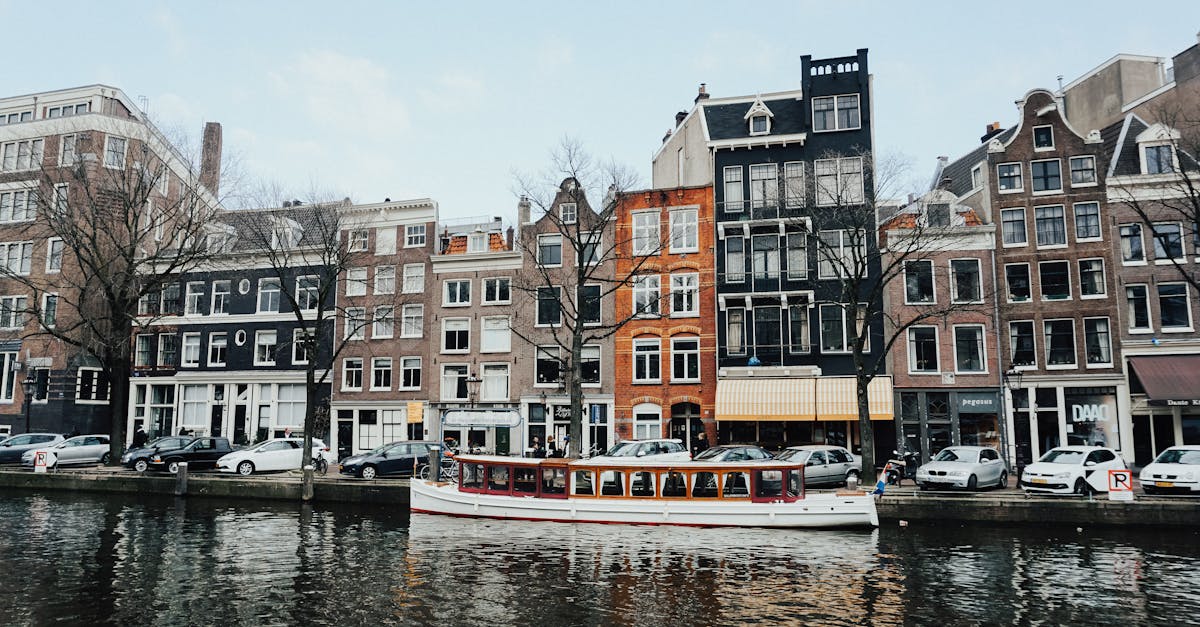
The Netherlands' global capital — canals, culture, and one of Europe's most vibrant tech and finance hubs
€3,000–€4,500
~155 Mbps avg.
Rotterdam
665,000 (1.4M metro area)
Europe's boldest port city — striking architecture, affordable rents, and a gritty creative energy unlike anywhere else in the Netherlands
€2,200–€3,200
~150 Mbps avg.
The Hague
563,000 (1.1M metro area)
The international city of peace and justice — diplomatic, polished, and 15 minutes from the North Sea beach
€2,500–€3,500
~150 Mbps avg.
Everything You Need to Know
In-depth guides on every aspect of expat life in Netherlands
Visa & Residency
EU and EEA citizens move to the Netherlands freely — no visa, no permit, just register at the municipality within 4 months. For non-EU nationals, the Netherlands offers a structured set of pathways designed to attract skilled workers, entrepreneurs, students, and family members. The most significant route for professionals is the Highly Skilled Migrant (Kennismigrant) permit, which allows multinational companies and recognised sponsors to fast-track top talent. The 30% ruling — a tax benefit now set at 27% — is available to most qualifying incoming workers and represents one of the most generous expatriate tax breaks in Europe.
Healthcare
The Dutch healthcare system is a managed competition model that consistently ranks among the best in Europe. It is mandatory for all residents — within 4 months of arrival you must take out basic health insurance (basisverzekering) from a private insurer. The government sets the minimum package and regulates premiums, which average around €150 per month for basic coverage. Your GP (huisarts) is the gatekeeper for all specialist care. The system features a modest annual own-risk (eigen risico) of €385, after which most treatments are fully covered. Emergency care is always provided regardless of insurance status.
Cost of Living
The Netherlands is an expensive country by European standards, particularly Amsterdam, where rents rival Paris and Copenhagen. However, strong salaries, the 30% ruling tax benefit, and excellent public services offset costs significantly for qualifying expat workers. The Dutch banking system is modern and internationally accessible — most major banks offer English online banking and fast account opening for residents with a BSN. The income tax system is progressive, but the 30% ruling (now 27%) is a meaningful financial advantage for those who qualify.
Housing
The Netherlands has one of Europe's most competitive rental markets. Amsterdam in particular has seen rents surge dramatically — a basic 1-bedroom in the city centre now regularly lists for €1,800–€2,400/month. Rotterdam and The Hague are meaningfully cheaper, but all major Dutch cities face acute housing shortages driven by population growth, regulatory constraints, and limited new construction. Finding accommodation requires speed, preparation, and often the help of a rental agent (makelaar). Most expats rent furnished or semi-furnished apartments on 1-year initial contracts.
Work & Business
The Netherlands is one of Europe's premier destinations for international professionals. English is effectively the working language in tech, finance, legal, and multinational corporate environments — many companies conduct all meetings and correspondence in English. The country hosts European headquarters for hundreds of global companies including ASML, Shell, Booking.com, Adyen, Philips, ING, and Netflix. Workers are protected by some of Europe's strongest labour laws, with minimum 20 days annual leave by law, generous sick pay, and significant protection against unfair dismissal. The 30% ruling provides a substantial tax advantage for qualifying incoming workers.
Daily Life
Daily life in the Netherlands is exceptionally well-organised, clean, and convenient. The cycling infrastructure is world-famous and genuinely transforms how you experience the country. Public transport is excellent and connects every major city in under an hour. The Dutch are direct, pragmatic, and welcoming — English is spoken so universally that the language barrier is almost non-existent in cities. The social calendar is full: King's Day on April 27 turns the entire country orange, summer festivals are plentiful, and weekend trips to Belgium, Germany, or England are effortless. The weather, grey and rainy for much of the year, requires mental preparation — but Dutch cycling culture and pub (café) culture provide the coping mechanisms.
Moving Guide
Moving to the Netherlands is logistically straightforward compared to many countries — the country is well-connected by air, road, rail, and sea, and the administrative process for EU citizens is simple. Non-EU nationals require an MVV entry visa before arrival if their nationality requires one. Upon arrival, registering at the gemeente (municipality) is the critical first step — it triggers your BSN number which unlocks banking, healthcare, and tax access. Most expats arrive via Amsterdam Schiphol, which offers direct flights from virtually every major global city.
Education
The Netherlands has an excellent and internationally respected education system. Dutch state schools are high quality, free, and teach English from age 10 (often earlier in international cities). For expat families intending to return to their home country or move onward, the Netherlands has an exceptionally strong network of international schools offering the International Baccalaureate (IB), British curriculum, American curriculum, and other national programmes. University education at world-ranked Dutch institutions is conducted largely in English — making the Netherlands one of Europe's leading study destinations for postgraduate students.
Lifestyle
Life in the Netherlands offers a genuinely exceptional combination of urban energy and natural accessibility. Amsterdam's world-class museums and canal culture, Rotterdam's architectural boldness, and The Hague's elegant internationalism together create a country that is small in geographic size but enormous in cultural richness. The Netherlands is a gateway to Europe — Brussels, London, Paris, and Berlin are all within 3–4 hours. Weekends bring tulip fields in spring, North Sea beaches in summer, and gezellige brown cafés and Christmas markets in winter. For sports enthusiasts, cycling is embedded in the culture, and the country has produced world-class footballers, tennis players, and cyclists.
Investing
Everything expats need to know about investing in Netherlands — from property and stocks to tax-efficient strategies, brokerage access, and building wealth abroad.
Netherlands at a Glance
Capital
Amsterdam (administrative: The Hague)
Population
17.9 million
Currency
Euro (€)
Official Language
Dutch
English
Excellent — ranked #1 globally, spoken by 93%+
Time Zone
CET/CEST (UTC+1 / UTC+2 summer)
Climate
Temperate maritime; mild, wet, and windy year-round
EU & Schengen
Yes — founding EU member
Avg. Internet Speed
~155 Mbps (fibre widely available)
Emergency Number
112 (EU standard), 0900-8844 (non-emergency police)
Plan Your Move to Netherlands
Netherlands vs Other Countries
See how Netherlands stacks up against other popular expat destinations
Netherlands vs Germany
Cost, visa, lifestyle
Netherlands vs United Kingdom
Cost, visa, lifestyle
Netherlands vs Sweden
Cost, visa, lifestyle
Netherlands vs Denmark
Cost, visa, lifestyle
Netherlands vs Belgium
Cost, visa, lifestyle
Netherlands vs Ireland
Cost, visa, lifestyle
Where Does Netherlands Rank?
Cheapest Countries for Expats
Ranked list of the most affordable countries for expats in 2026. Monthly budget, cost of living, internet speed, and city guides for each destination.
Countries Under $1,500/Month Cost of Living
Complete list of countries where a single expat can live comfortably on under $1,500 per month. Budget breakdowns, internet speeds, and city guides included.
Countries Where $2,000/Month Is Enough
All countries where a single expat can live well on $2,000 per month or less. Ranked by cost of living with budget details, internet, and English proficiency.
Best Countries for Remote Workers
Top countries for remote workers ranked by internet speed, cost of living, and English proficiency. Find your ideal work-from-anywhere destination in 2026.
Countries With the Fastest Internet
Ranked list of countries with the fastest broadband internet speeds for expats. Average Mbps, cost of living, and city guides for each destination.
Best Countries for Retirement Abroad
Top countries for retirement ranked by cost of living, climate, healthcare access, and safety. Find the perfect retirement destination in 2026.
Frequently Asked Questions About Netherlands
How much does it cost to live in Netherlands as an expat?
What visa do I need to move to Netherlands?
What is healthcare like in Netherlands for expats?
What are the best cities to live in Netherlands as an expat?
Is Netherlands a good place to live as an expat in 2026?
Is Netherlands right for you?
Answer a few quick questions about your budget, lifestyle, and priorities. Our AI matches you with the best countries and builds a personalised relocation plan.
Expat Insights, Weekly
Get the latest visa updates, cost-of-living data, and expat stories from Netherlands straight to your inbox.
Free: The Ultimate Expat Checklist
Everything you need to prepare before moving abroad — visa, finances, healthcare, housing, and more.