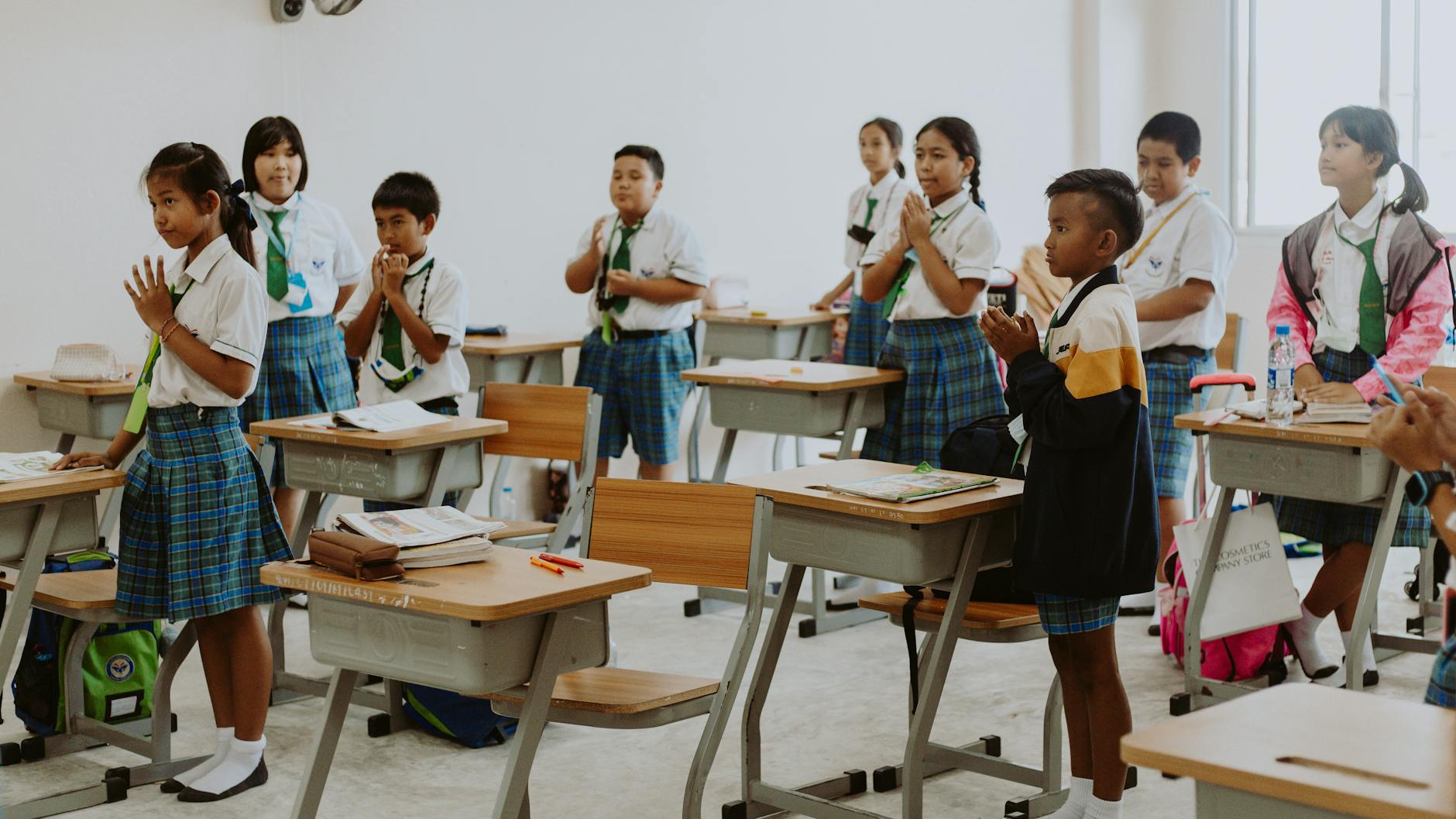
Every expat family faces the same impossible-feeling question within weeks of deciding to move abroad: where will the kids go to school?
The answer isn't obvious. International schools promise continuity but cost more than many mortgages. Local schools are free and offer true cultural immersion but drop your child into a classroom where they don't speak the language. Homeschooling gives you total control but is literally illegal in some countries.
There's no universally right answer. But there is a framework for making the decision, and it starts with being honest about what your family actually needs.
International schools: the gold standard (at gold prices)
International schools teach in English (usually), follow recognized curricula (IB, British, American), and cater specifically to expatriate families. They're designed for exactly your situation — a child arriving mid-year from another country.
Typical costs (2026):
- Southeast Asia (Bangkok, KL, Singapore): $8,000–$25,000/year
- Europe (Lisbon, Barcelona, Berlin): $12,000–$30,000/year
- Middle East (Dubai, Abu Dhabi): $10,000–$35,000/year
- Latin America (Mexico City, São Paulo): $8,000–$20,000/year
- Premium tier (ISL London, AIS Hong Kong, SAS Singapore): $30,000–$45,000/year
The hidden costs: Tuition is just the start. Registration fees ($1,000–$5,000), uniforms ($300–$800), school trips ($500–$2,000), technology fees ($500–$1,000), and transportation ($2,000–$5,000/year for school bus) add 20–40% on top of tuition.
Pros:
- English-medium instruction with immediate integration
- Internationally recognized qualifications (IB diploma accepted by universities worldwide)
- Multicultural environment — your child's classmates are from 30+ countries
- Pastoral care systems designed for children in transition
- Consistent curriculum if you move again — IB and British schools exist in 150+ countries
Cons:
- Eye-watering cost — $15K–$40K per child per year
- "Expat bubble" effect — children may not integrate with local culture
- Friends leave frequently (the "third culture kid" goodbye cycle)
- Waitlists at top schools can be 1–2 years in popular cities
- Some are genuinely mediocre despite high fees — always visit before enrolling
Best countries for international schools: UAE (most schools per capita), Singapore (highest quality average), Thailand (best value), Netherlands (strong options with lower fees than UK).
Local schools: the immersion gamble
Enrolling your child in a local school is the boldest education choice an expat family can make. It's also potentially the most rewarding.
Typical costs:
- Public schools: Free in most countries (small fees for materials, €100–€500/year)
- Private local schools: $2,000–$8,000/year (much less than international schools)
The honest truth: A 7-year-old dropped into a Portuguese school with zero Portuguese will have a rough 3–6 months. But children under 10 typically achieve conversational fluency within 6–12 months and functional academic fluency within 18–24 months. The research on childhood language acquisition is unambiguous: younger is better, immersion works, and bilingualism provides lifelong cognitive benefits.
Pros:
- Free or very low cost
- True language immersion — your child will become bilingual
- Deep cultural integration — local friends, local holidays, local identity
- Your child develops adaptability and resilience
- Bilingual brains show measurably better executive function and cognitive flexibility
Cons:
- The transition period is genuinely hard — tears, frustration, social isolation
- Parents can't help with homework in a language they don't speak
- Curriculum may not transfer easily if you move to another country
- Teaching quality varies enormously between countries and schools
- Some countries have excellent public systems (Finland, Netherlands), others are under-resourced
Best countries for local school immersion: Finland (world's top public education), Netherlands (many schools offer bilingual programs), Portugal (welcoming culture, small class sizes), Spain (strong public system in affluent areas), Japan (excellent academics but intense pressure).
Homeschooling: total control, total responsibility
Homeschooling abroad sounds like the perfect third option — teach your own curriculum, travel freely, keep continuity regardless of where you live. And for some families, it genuinely is.
But the legal landscape is complicated.
Where homeschooling is legal and straightforward:
- United Kingdom — no registration required
- Portugal — legal with approval from the local school authority
- Thailand — legal for foreign families (not required to follow Thai curriculum)
- Mexico — legal and unregulated
- Spain — legal gray area, generally tolerated
- Indonesia — legal for foreign nationals
Where homeschooling is illegal or heavily restricted:
- Germany — illegal under the Schulpflicht (compulsory attendance law). Families have been fined and even had custody threatened. No exceptions for expats.
- Netherlands — only permitted for religious or philosophical objections, with strict approval
- Sweden — effectively banned since 2010, with extremely rare exceptions
- Brazil — illegal (though a legalization bill is pending)
If you're considering Germany as an expat with school-age children: Local school or international school are your only legal options. Homeschooling is not just discouraged — it's prosecuted. Several expat families have learned this the hard way.
Typical costs:
- Curriculum subscription (Oak Academy, IXL, Time4Learning): $200–$600/year
- Books and materials: $200–$500/year
- Tutors for specific subjects: $30–$80/hour
- Co-op or learning pod participation: $100–$300/month
- Total: $1,000–$5,000/year (plus one parent's time)
Pros:
- Complete curriculum control — use American, British, or IB materials
- Location flexibility — you can travel while schooling
- Pace adapts to your child — no boredom or falling behind
- Strong parent-child bond through shared learning
- Growing community of "worldschooling" families
Cons:
- Illegal in several popular expat countries
- One parent must essentially stop working (or dramatically reduce hours)
- Socialization requires active effort — co-ops, sports clubs, local activities
- Hard to do well for secondary/high school subjects (advanced math, sciences, labs)
- University admissions can be complicated without recognized transcripts
The decision framework
After talking to dozens of expat families, I've found the decision usually comes down to three factors:
1. Age of children
- Under 7: Local school is usually the best choice. Children this age acquire languages effortlessly.
- 7–12: Either option works. International school for shorter stays (<2 years), local for longer.
- 13+: International school strongly recommended. Teens need social stability and recognized qualifications for university.
2. Length of stay
- Under 2 years: International school. Not enough time for local school language acquisition to pay off.
- 2–5 years: Local school if children are young, international if teens.
- Permanent: Local school, hands down. Long-term integration matters more than short-term comfort.
3. Family budget
- Under $10K/year per child: Local school or homeschooling
- $10K–$25K: Mid-tier international school in affordable countries
- $25K+: Premium international school anywhere
Key Takeaways
- International schools cost $15K–$40K/year — excellent for continuity but creates an expat bubble
- Local schools are free and produce bilingual children — but the first 6 months are hard
- Homeschooling is illegal in Germany, Sweden, and Netherlands — check before you plan
- Children under 10 adapt fastest to local schools — language fluency in 6–12 months
- Budget 20–40% above tuition for international school hidden costs
- Length of stay matters most — under 2 years favors international, over 2 favors local
- Visit schools in person before committing — quality varies enormously within every category
The honest conclusion
There's no wrong choice here — only trade-offs. International schools trade money for comfort. Local schools trade short-term pain for long-term gain. Homeschooling trades a parent's career for total educational control.
The families who thrive abroad are the ones who make a conscious choice based on their specific situation, rather than defaulting to what feels safe.
If you're still deciding where to move, our expat quiz factors in family-friendliness and education quality. And our country guides cover education systems for every destination.
Last updated: March 18, 2026
Which country is right for you?
Answer 6 quick questions about your budget, lifestyle, and priorities. Our AI ranks 122 countries and builds a personalised relocation plan.
Enjoyed this article?
Subscribe for more expat tips and guides.
Free: The Ultimate Expat Checklist
Everything you need to prepare before moving abroad — visa, finances, healthcare, housing, and more.