I'd been staring at spreadsheets for weeks. After two years of bouncing between Lisbon, Bali, and Medellín — the holy trinity of digital nomad clichés — I'd grown tired of watching my savings plateau despite earning a decent remote income. Every "affordable" city I moved to seemed to get 10–15% more expensive with each return visit. Lisbon had doubled since I first arrived in 2023. Canggu villas that were $350/month were now $700.
Then a friend in Zagreb mentioned Bosnia. "It's literally half the price of Croatia," she said, "and the food is better." I was skeptical. Bosnia wasn't on any nomad radar I followed. No influencer was posting Reels from Sarajevo. No "Top 10 Nomad Destinations" list included it.
That alone made me curious.
I booked a one-way bus ticket from Split, Croatia to Sarajevo for €25 and committed to three months. Here's what happened.
The $800/month budget breakdown
Let me start with the numbers, because that's probably why you're reading this. Here's my actual monthly spending averaged across three months in Sarajevo (January–March 2026):
- Rent (1-BR apartment, Baščaršija area): $300
- Groceries: $150
- Dining out (3–4 times/week): $100
- Transport (tram + occasional taxi): $30
- Utilities (electricity, water, heating): $60
- Entertainment (cafés, drinks, cultural events): $80
- Miscellaneous (SIM card, toiletries, random purchases): $80
- Total: $800/month
That's not a survival budget — that's a genuine, comfortable life. I ate well, went out regularly, heated my apartment (crucial in Sarajevo's cold winters), and had money for weekend trips to Mostar and the surrounding mountains.
How much does it cost to live in Bosnia as an expat?
Quick answer: A comfortable single person can live well in Sarajevo on $700–$900/month. Mostar is 15–20% cheaper. These are the lowest costs in continental Europe — roughly half of Croatia and a third of Western European capitals.
For context, here's how Bosnia compares to its neighbors:
- Sarajevo 1-BR rent: $250–$350/month
- Zagreb (Croatia) 1-BR rent: $550–$750/month
- Split (Croatia) 1-BR rent: $600–$900/month
- Belgrade (Serbia) 1-BR rent: $400–$550/month
- Ljubljana (Slovenia) 1-BR rent: $700–$900/month
Bosnia isn't just cheaper than Western Europe — it's significantly cheaper than other Balkan countries too. Only North Macedonia comes close in terms of raw affordability.
Sarajevo: Ottoman, Austro-Hungarian, and Soviet all in one
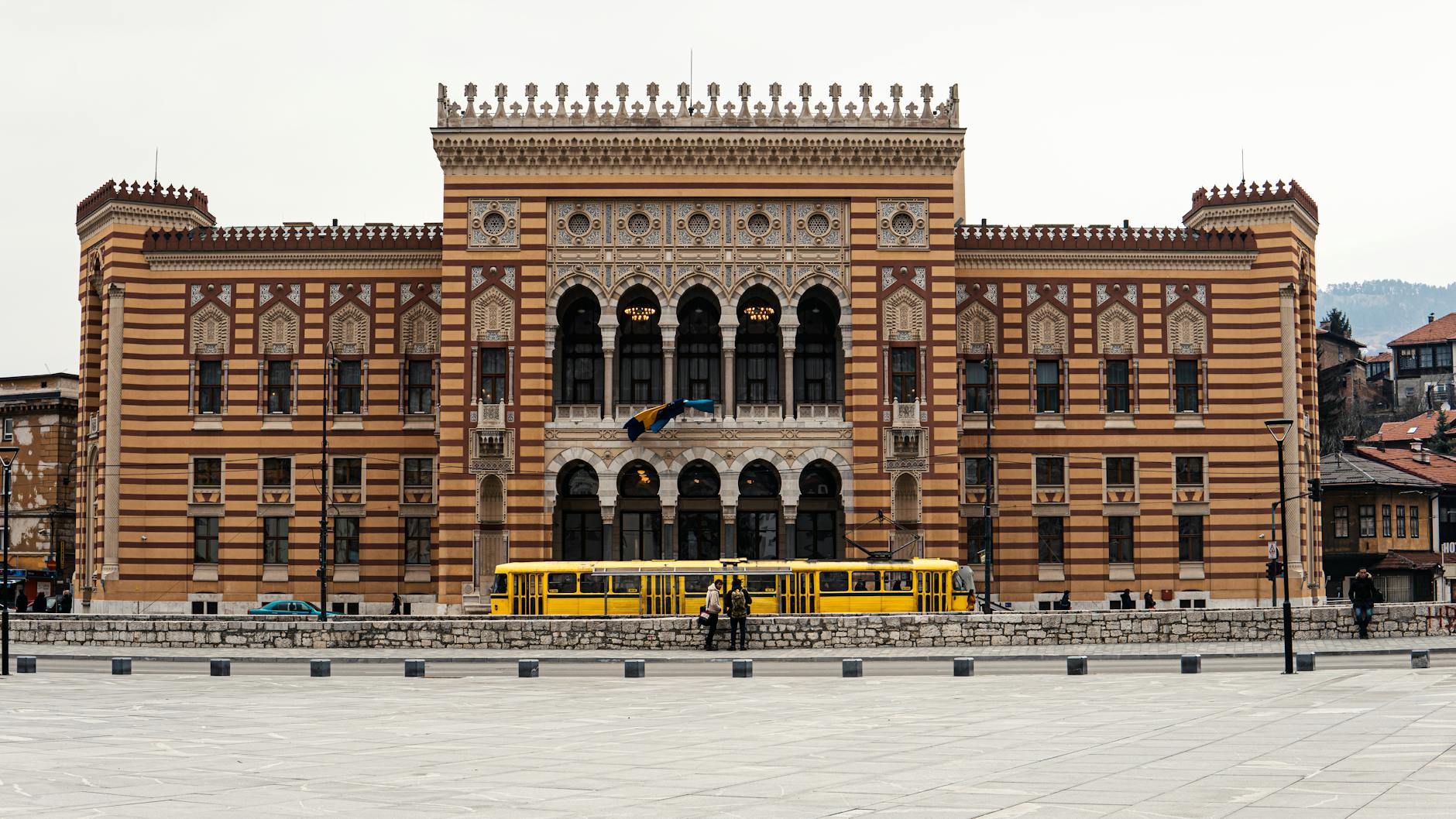
Nothing prepares you for how visually layered Sarajevo is. Walk east from the city center and you're in Baščaršija — the old Ottoman bazaar district, all copper workshops, tiny ćevapi joints, and the sound of the call to prayer echoing between minarets. Walk west and you're in the Austro-Hungarian grid: ornate facades, Viennese-style cafés, and a cathedral that could be in Prague.
Keep walking west and you hit the Yugoslav-era brutalist blocks — massive concrete apartment buildings that have their own strange, imposing beauty. The whole city is built along the narrow Miljacka River valley, squeezed between mountains on both sides. It feels intimate in a way that sprawling cities can't match.
The coffee culture alone is worth the trip. Bosnian coffee — served in a small copper džezva with sugar cubes and a piece of Turkish delight — is a ritual, not a beverage. You'll spend 45 minutes over a single cup, and that's the point. A Bosnian coffee costs €1–€1.50 in Baščaršija. Compare that with €4.50 for a flat white in Lisbon.
The food situation (it's incredible)
Let me be direct: Bosnian food is some of the best I've eaten anywhere. The country sits at the crossroads of Ottoman, Mediterranean, and Central European culinary traditions, and the results are spectacular:
Ćevapi — The national dish. Grilled minced meat fingers served in somun bread with raw onion and kajmak (a clotted cream). A full portion costs €2.50–€3.50 and is genuinely one of the greatest street foods on Earth. The debate between Sarajevo-style and Banja Luka-style ćevapi is fierce and endless.
Burek — Flaky phyllo pastry filled with meat (burek), cheese (sirnica), spinach (zeljanica), or potato (krompiruša). Eaten for breakfast, lunch, or at 2 AM after drinks. €1.50 for a massive portion with yogurt.
Bosanski lonac — A slow-cooked meat and vegetable stew that's Bosnia's answer to French pot-au-feu. Found in traditional restaurants for €4–€6.
I cooked at home roughly half the time and ate out the rest. Home cooking was absurdly cheap — the Markale market in the city center sells fresh produce at prices that feel like a time machine. A kilogram of tomatoes for €0.80. Fresh bread for €0.40. Local cheese for €5/kg.
Mostar: even cheaper, jaw-droppingly beautiful
Halfway through my stay, I took the bus to Mostar (€10, 2.5 hours through stunning mountain scenery) and ended up staying for three weeks. Mostar is built around the Stari Most — the Old Bridge — a 16th-century Ottoman arch bridge that was destroyed during the war and meticulously rebuilt. It's one of the most photographed structures in the Balkans, and seeing it in person is genuinely moving.
Mostar is 15–20% cheaper than Sarajevo. I found a comfortable apartment for $250/month, a 5-minute walk from the old town. Summer is peak season (bridge divers, tourists), but in winter and spring the town belongs to locals. The Neretva River runs an impossible shade of emerald green. The surrounding hills are dotted with abandoned fortifications you can hike to for free.
The downside? Mostar is smaller, with fewer coworking options and a smaller international community. Internet was solid (50 Mbps in my apartment) but not as reliably fast as Sarajevo's. For a few weeks of deep focus work interspersed with exploring, it's perfect. For a long-term base, Sarajevo makes more sense.
Is Bosnia safe for foreigners?
Quick answer: Yes. Bosnia-Herzegovina is very safe for tourists and expats. Violent crime rates are among the lowest in Europe. Petty theft exists but is rare. The country has been stable since the end of the 1990s conflict, and locals are overwhelmingly welcoming to visitors.
I'll be honest — the safety question came up from everyone I told about my Bosnia plan. The 1990s conflict casts a long shadow in people's minds, especially for those who remember it on the news. But modern Bosnia is a fundamentally different place.
I walked home alone at midnight through Sarajevo's streets multiple times and never felt remotely unsafe. Locals often went out of their way to help when I looked lost. The country has a genuine culture of hospitality — offering coffee to guests (even strangers) is practically a social obligation.
The main physical safety concern is landmines in rural areas — some countryside zones along former front lines still have unexploded ordnance. Stick to established paths when hiking and you're fine. Urban areas are completely safe.
The honest downsides
I wouldn't be giving you the full picture if I only talked about the cheap ćevapi and beautiful bridges. Bosnia has real drawbacks for digital nomads:
Limited coworking infrastructure. Sarajevo has 3–4 coworking spaces (Nest Coworking is the best), but nothing compared to the dozens in Lisbon or Chiang Mai. Most remote workers I met simply worked from cafés or their apartments. Internet in apartments averaged 50–100 Mbps — decent but not world-class.
Bureaucracy is painful. If you need to do anything official — register an address, extend a visa, open a local bank account — prepare for frustration. Government offices often have irregular hours, minimal English, and procedures that seem designed to be confusing. I found local Facebook groups invaluable for navigating this.
Language barrier is real. Bosnian is a South Slavic language, and English proficiency is lower than in Croatia or Slovenia — especially outside Sarajevo's center. Younger Bosnians often speak good English, but at the market, in taxis, and at government offices, you'll need basic Bosnian phrases or Google Translate.
Small international community. There's no established nomad scene. You won't find networking events, co-living spaces, or the kind of instant community that exists in Lisbon's Alfama or Medellín's Poblado. This can be refreshing (no "what do you do?" small talk at every café) or isolating, depending on your temperament.
Cold winters. Sarajevo sits in a valley at 500 meters elevation. January temperatures regularly drop to -5°C to -10°C, and the city sometimes gets trapped under a blanket of winter smog (coal heating + valley geography). If you're coming from Bali, the thermal shock is real.
The Croatia comparison that seals the deal
The simplest way to understand Bosnia's value is to compare it with Croatia next door. Same region, shared history, similar food traditions — but Bosnia is literally half the price.
| Category | Sarajevo | Split (Croatia) |
|---|---|---|
| 1-BR rent | $300/mo | $700/mo |
| Dinner for 2 | $15–$20 | $40–$50 |
| Beer (bar) | $1.50 | $4.00 |
| Coffee | $1.20 | $3.50 |
| Monthly total | $800 | $1,800+ |
Croatia is in the EU and the eurozone, which contributes to its higher prices. Bosnia uses the convertible mark (BAM), pegged to the euro at a fixed rate, providing currency stability without EU-level prices. You get European life at developing-world costs.
Key Takeaways
- Total monthly cost: $700–$900 for a comfortable life in Sarajevo — the cheapest in continental Europe
- Rent is the headline number: $250–$350 for a 1-BR apartment in the city center
- Food is exceptional and cheap — ćevapi, burek, and fresh market produce at prices that feel surreal
- Bosnia is half the cost of Croatia with similar quality of life in many respects
- Safety is not a concern — the country is stable and locals are remarkably hospitable
- Downsides are real: limited coworking, language barrier, bureaucracy, cold winters, tiny nomad community
Would I go back?
Absolutely — and I'm planning to. Sarajevo gave me something that two years on the nomad circuit hadn't: the feeling of discovering a place before everyone else shows up. There are no nomad influencers on every corner. No Instagrammable coworking spaces with $6 oat milk lattes. Just a genuinely fascinating, affordable, and underappreciated city that rewards curiosity.
If you're the kind of person who picked Medellín in 2018 or Lisbon in 2019 — before the crowds — Bosnia is your 2026 move.
Start by exploring the Bosnia-Herzegovina country guide or compare Sarajevo with other budget European cities. And if you're not sure where your next move should be, the expat quiz can help narrow it down based on your budget and priorities. For the data-minded, check our cheapest countries ranking — Bosnia consistently sits in the top 5.
Last updated: March 20, 2026
Which country is right for you?
Answer 6 quick questions about your budget, lifestyle, and priorities. Our AI ranks 122 countries and builds a personalised relocation plan.
Enjoyed this article?
Subscribe for more expat tips and guides.
Free: The Ultimate Expat Checklist
Everything you need to prepare before moving abroad — visa, finances, healthcare, housing, and more.
Enjoyed this article? Share it with fellow expats